Category: naujienos

  • BIRUTĖ MAR: “THE TRAGEDY OF THE PAST IS OUR TEACHER”

    BIRUTĖ MAR: “THE TRAGEDY OF THE PAST IS OUR TEACHER”

    Speech by Birutė Mar, actress and director of Solo Theatre, delivered at the Parliament of the Republic of Lithuania on June 14, 2025, during the commemoration of the Days of Mourning and Hope and the Day of Occupation and Genocide.
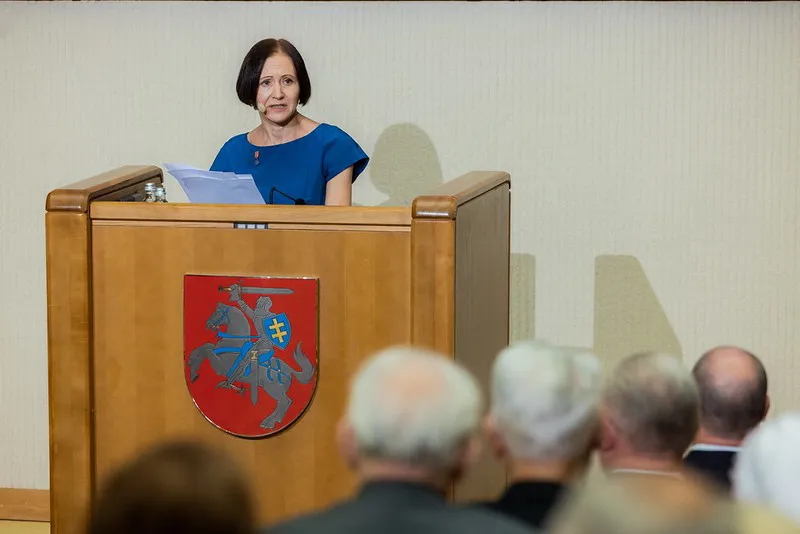
    Photo by the Office of the Parliament (author Olga Posaškova)

    I am grateful to be invited today to speak on my own behalf as well. Before that, I read poems by deportees – Juozas Butkevičius, Izabelė Baublytė-Balčiūnienė, Vytenis Grabauskas – written in distant Siberia, in the steppes of Kazakhstan, in the Mordovia camps, on the ice islands of the Laptev Sea… The final verses are my own, written while listening to my parents’ stories about their childhood in exile.

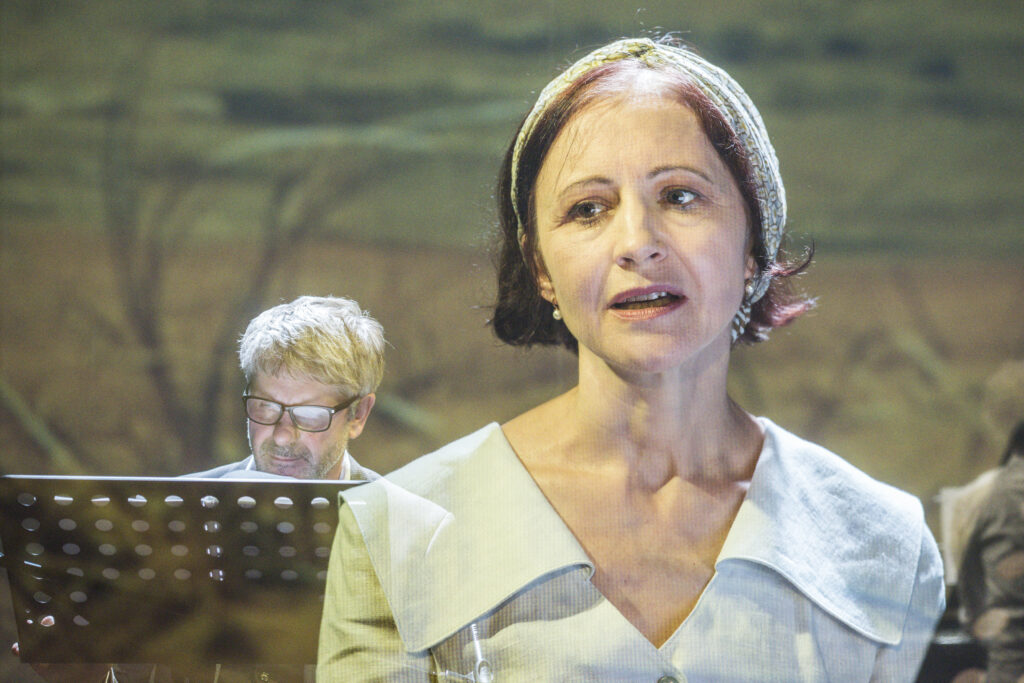
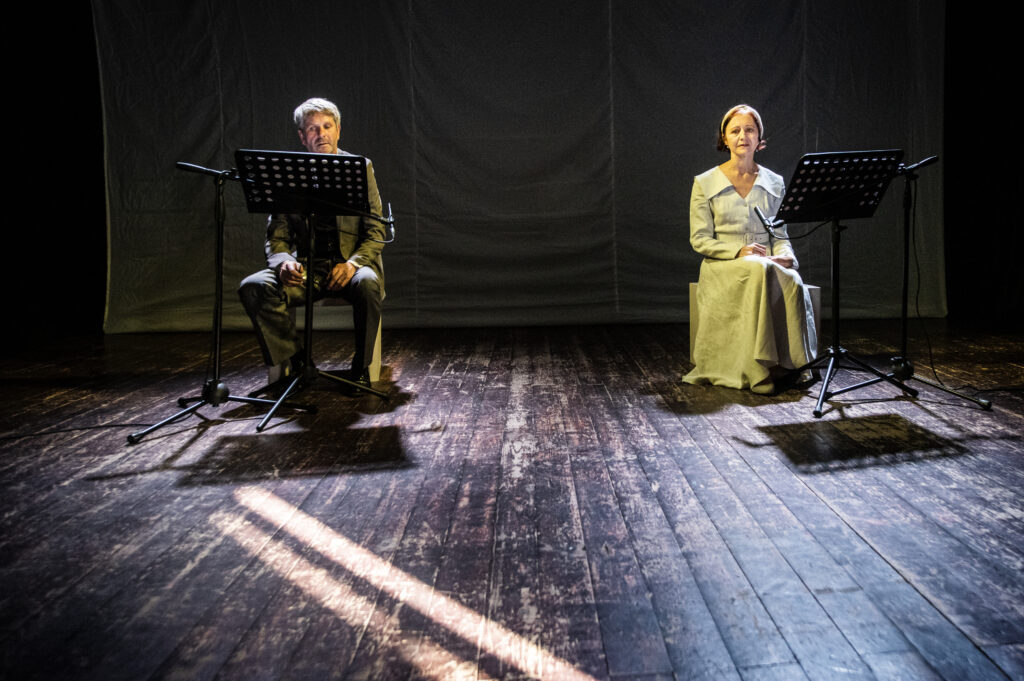
    My parents were also deportees from the islands of the Laptev Sea, exiled on that fateful June 14, 1941. They were deported as children, like many others, and fate led them to grow up together in the same yurt on Tit-Ary Island, in the northernmost and most remote places of Lithuanian exile… Based on my parents’ childhood memories and the stories of other deportees, I created the performance “Ice Children”, whose heroine is a four-year-old girl travelling by train into the unknown, just as my mother, Jūratė Vaičiūnaitė, once was. I was especially moved by her memory of a moment in the train, which carried many Lithuanians eastward, while the girl, of course, still did not understand where they were being taken. While playing, a small button fell off her dress and accidentally rolled onto the railway tracks. She cried inconsolably over that button, and later kept dreaming of returning to find it… When my mother told me this, that red child’s lost button on the tracks immediately appeared to me as an incredibly fragile and painful metaphor – as if it were the fate of Lithuania itself at that time. And in that train, my mother said, seeing the many overcrowded wagons moving in one direction, people thought that all of Lithuania was being taken away…

    I conclude the performance “Ice Children” with my mother’s words, which she said many years later and which have stayed with me ever since. During my parents’ golden wedding anniversary, when the priest in the church blessed them and asked: “And who made the two of you so beautiful?”, my mother replied at that very moment: “Siberia, we are Siberian children.”

    My mother is already in heaven, but her boundless strength remains with me. And as I experience the performance myself each time, I draw strength from all those people whose fragments of life and memories I have woven into the play. It seems to me that the hardest fate fell not to the parents, who were still children then, who did not yet know what is good or evil, but to my grandparents, teachers who were deported in their mature years, whose youth had passed in independent Lithuania, who worked and built that independent Lithuania – both of them taught in schools in the Kupiškis region. My grandfather, Klemensas Vaičiūnas, was a school principal and at that time was building a new school in Šeduva. According to my mother, her parents’ generation – people of independence – were completely different. “Their values were different,” she used to say. Honesty. Inner dignity. “Village lanterns…” is what teachers were called then. In other words, “bearers of light” – not without reason, of course, they were among the first to be deported so that they would no longer illuminate others. That is why those lanterns could not understand at all why they were being taken away. And so they did not run – they believed they were innocent and would soon return…

    And they returned to Lithuania after twenty-two years, in 1963. Of course, not all of them returned… My father then spent another three years in the Russian army, on a submarine near Sakhalin. His words: “When I returned to my homeland and stepped out of the train, I knelt down, took a handful of Lithuanian soil, and, unable to hold back, burst into tears”…

    I remember what a miracle the 1990s and independence were for my parents. It became, at last, their fully lived life. They did not miss a single rally, stood day and night near the Parliament during the events of January 13, took part as observers in all elections and votes, carried ballots everywhere. Whenever the Lithuanian national anthem, “Lithuania, Dear Land,” or songs and poems about the homeland were heard, tears would appear in my mother’s eyes; she always wore traditional national dress. Later, however, my mother could not understand how quickly people forgot the price of freedom. What weighed most heavily on her, as life improved, was people’s dissatisfaction with trivial matters and internal quarrels. She kept repeating: how can one, in the name of comfort, forget what is most important? I was most deeply moved by my mother’s words, spoken during a period of crisis when pension cuts for seniors were being discussed: “I can donate my pension, as long as it helps Lithuania become better…”

    And I wondered: what would my parents say standing here today? A few days ago, I asked my ninety-year-old father, Algirdas Marcinkevičius, exactly that – what he would say if he had to speak at this commemoration. He answered immediately, formulating it very clearly and concisely:


    “I would say that without the past, there is no future. Many people now say: Let us forget what was. But we cannot forget, because THE TRAGEDY OF THE PAST IS OUR TEACHER… And today, living in joy, we must remember the past and think about why it happened, so that it would not happen again…”

    THE TRAGEDY OF THE PAST IS OUR TEACHER.

    Reflecting on this, I would like to quote words that feel especially relevant today, spoken by the heroine of my other performance, the early 20th-century Lithuanian intellectual and writer Marija Pečkauskaitė-Šatrijos Ragana:


    “What kind of nation are we, if for a wounded ambition we go to the enemy and smear our own people with mud? How can culture rise when party struggle reigns everywhere: what one side builds, the other destroys! /…/ They quarrel not for the greater good of Lithuania, but for wounded egoism! /…/ When foreigners only sought their own benefit, we understood it – we knew there were oppressors. But when we ourselves are driven by a single thought – how to take the biggest piece of the ‘state cake’ – then the heart breaks. I know there are patriots, there are true Christians – otherwise everything would collapse! But why so few?”


    And this was written a hundred years ago.

    Let us remember these words today as well, as we mark June 14 in these halls, and every day. Because today we are more vulnerable than ever. It is frightening that a small child’s dress button could once again end up on the tracks… We are strong only when we are united. Unity helped Lithuanians survive both in the camps and in exile. As my mother used to say, let us not forget the most important values – that freedom, a free Lithuania, is a MIRACLE, something never forgotten for a moment by those who know its price. The tragedy of the past is our teacher.

    Thank you to all deportees and political prisoners – and I see many of you here in this hall – whose strength, unity, and courage led us to FREEDOM. And I will say it again with all my heart: thank you to Ukraine, from which we are drawing strength today, and which is defending our freedom as well.

  • A cycle of current Solo Theatre performances in Vilnius – for audiences in the capital and international visitors.

    A cycle of current Solo Theatre performances in Vilnius – for audiences in the capital and international visitors.

    Solo Theatre is implementing a project in 2026, presenting a cycle of new performances in Vilnius under the motto “Theatre as Living History.” Residents of Vilnius and visitors to the capital will have the opportunity to see new and highly relevant contemporary theatre productions created on the basis of documentary material. The performances introduce important cultural figures from Lithuanian history, while also exploring themes of genocide and historical trauma, resonating with current global events, the threat of war, and the states of uncertainty and anxiety experienced by the modern individual.

    The project will present five productions, including “The Unwritten Letter”, inspired by the life and creative work of Šatrija Ragana. Excerpts from her letters, written a century ago, prompt reflection and resonate strongly with the present day: “What kind of nation are we, if for wounded pride we go to the enemy and smear our own people with mud? How can culture rise when party struggle dominates everywhere: what some build, others destroy! People quarrel not for the greater good of Lithuania, but for wounded egoism!”

    “The Thinking Barracks Heart” – stories of three genocides (Buča, the fate of Ukrainian Natalija Skrinnik, who spent a month in captivity; Lithuanian Joana Ulinauskaitė-Mureikienė, imprisoned in Siberian labour camps; and the life of Jewish writer Etty Hillesum, who perished in Auschwitz); “Mother’s Milk” based on the novel by the well-known Latvian writer N. Ikstena, who passed away this year; and “Ice Children” – already a classic of Lithuanian theatre, based on the memories of the author’s parents and other Lithuanian deportees about the first deportations on 14 June 1941, and the survival stories of Lithuanian exiles in the far north near the Laptev Sea (also incorporating D. Grinkevičiūtė’s now-classic memoir “Lithuanians by the Laptev Sea”).

    The cycle also includes the much-loved family performance “Princess Island,” popular among younger audiences. The production fosters children’s empathy, imagination, and musicality, inviting both adults and children to spend meaningful time together on weekends and share their impressions of the performance.

    An innovation of the cycle is that the performances “Ice Children” and “Mother’s Milk” are presented with English subtitles, in order to attract visitors to Vilnius as well as international residents living and working in the capital, whose numbers are steadily growing and for whom it is equally important to become acquainted with contemporary Lithuanian theatre culture and the history of Lithuania.

    In order to ensure the highest artistic quality, professionalism, and broader audience engagement, the 2026 performances will be staged in prestigious venues: the Small Hall of the Lithuanian National Drama Theatre, Arts Printing House, and, for the children’s performance, the newly established theatre space “Smala” (formerly the Chamber Theatre) located on Konstitucijos Avenue.

    According to director and project initiator Birutė Mar, history brought to life on stage through the language of theatre is especially relevant today – offering powerful lessons of history to audiences: “I have often heard audience responses and gratitude after performances such as Ice Children and The Thinking Barracks Heart – people say that during the performances they felt as if they themselves had travelled in deportation wagons, experienced hunger, cold, and the hope of returning home, which gave strength and the ability to endure to our parents and ancestors. I am glad that, thanks to Solo Theatre productions, audiences can reflect on the most important human values, and on the significance of the homeland as one of the most essential of these values. I also believe that in Vilnius it is becoming increasingly important that theatre is accessible not only to local residents, but also to English-speaking visitors and international residents, whose number in the capital continues to grow.”

    It is encouraging that the audience of the “Theatre as Living History” cycle for Vilnius residents includes the international student community of Lithuanian universities, visitors to the city, and employees of foreign embassies working in Lithuania. The performances are also attended by the youngest audience members – pupils from Vilnius gymnasiums and higher education institutions, as well as students, who have the opportunity to see the productions through the Cultural Passport programme.

    …

    The project is partially funded by the Vilnius City Municipality, and its dissemination is carried out in cooperation with foreign embassies in Lithuania and the Lithuanian Culture Institute.

  • “Theatre as Living History”: Cultural Legends Return to the Stage

    “Theatre as Living History”: Cultural Legends Return to the Stage

    Solo Theatre, in collaboration with the Lithuanian Theatre, Music and Cinema Museum (LTMCM), presents the 2026 event cycle “THEATRE AS LIVING HISTORY.” Through the experience of documentary theatre, insights from professional theatre researchers, discussions, and the opportunity to explore the museum’s collections, the programme introduces audiences to significant cultural figures connected to the development of Lithuanian theatre. These include writers Jonas Biliūnas (1879–1907) and Marija Pečkauskaitė–Šatrijos Ragana (1877–1930), actress and director Une Babickaitė (1897–1961), as well as theatre legends Monika Mironaitė (1913–2000) and Rūta Staliliūnaitė (1938–2011).

    The dramaturgy of this documentary theatre cycle is based on authentic archival material—letters, fragments of literary works, official documents, and discussions with researchers. It helps audiences understand how culture shaped the identity of Lithuanian society and strengthened the idea of statehood. After all, the history of Lithuanian theatre is a reflection of the nation’s development, closely intertwined with difficult periods in Lithuania’s past: the oppression of the Russian Empire and the Soviet occupation. Emerging at the turn of the 19th and 20th centuries, Lithuanian theatre became an important silent instrument of national resistance, contributing to the preservation of the Lithuanian state and the restoration of independence.

    The initiator of the project, playwright, director, and actress Birutė Mar, has for many years been creating documentary theatre based on the lives of historical figures. She has often been described as “an actress-theatrologist on stage,” capable of vividly reviving and revealing the destinies of artists and creators. Audiences at the Lithuanian Theatre, Music and Cinema Museum’s “Muzeoteka” will have the opportunity to see five performances created by this versatile artist: “He and She”, “Unwritten Letter”, “Unė”, “The Lithuanian Nora”, as well as a sketch presentation of the new performance “I Am the Queen”, dedicated to the creative legacy of actress Rūta Staliliūnaitė. After the performances, renowned Lithuanian theatre scholars and writers, including Dr. Rasa Vasinauskaitė, Prof. Dr. Aušra Martišiūtė-Linartienė, literary scholar, Dr. Daiva Šabasevičienė, director of the Institute of Lithuanian Literature and Folklore and professor at the Lithuanian Academy of Music and Theatre, as well as writers Aldona Ruseckaitė and Arvydas Juozaitis, will present different stages of Lithuanian theatre history and discuss the contribution of the performances’ protagonists to the cultural history of the country.

    Audiences will also have the opportunity to visit the collections of the Lithuanian Theatre, Music and Cinema Museum and view the exhibits preserved there.

    Events of the cycle “Theatre as Living History” at the LTMCM “Muzeoteka”

    22 April 2026, 6:00 PM — “HE AND SHE” A performance based on the letters and creative works of Jonas Biliūnas and Julija Janulaitytė-Biliūnienė. After the performance, theatre scholar Dr. R. Vasinauskaitė will present an overview of the origins of Lithuanian theatre at the turn of the 19th–20th centuries, amateur theatre evenings (which Jonas Biliūnas himself participated in while studying at Liepāja Gymnasiums), as well as the first Lithuanian theatre performance staged on 20 August 1899 in Palanga — Keturakis’ comedy “America in the Bathhouse.” The evening will conclude with a discussion with the audience, featuring theatre scholar Dr. R. Vasinauskaitė and the creative team of the performance.

    On June 5, 2026, at 6 PM – “UNWRITTEN LETTER”. A stage impression based on the life and destiny of writer and educator Marija Pečkauskaitė-Šatrijos Ragana. After the performance, literary scholar Prof. Dr. Aušra Martišiūtė-Linartienė, Director of the Institute of Lithuanian Literature and Folklore, professor at the Lithuanian Academy of Music and Theatre, and recipient of the 2025 Šatrijos Ragana Prize for the monograph “Juozas Vaičkus: Spiritus Movens of Lithuanian Theatre and Cinema”, will present the personality of director Juozas Vaičkus and discuss the contribution of Marija Pečkauskaitė-Šatrijos Ragana, who wrote and directed plays in gymnasiums, to the development of Lithuanian theatre. Conversation with the audience featuring Prof. Dr. Aušra Martišiūtė-Linartienė and the creative team of the performance. The evening will conclude with a discussion with the audience, featuring Prof. Dr. A. Martišiūtė-Linartienė and the creative team of the performance.

    23 September 2026, 6:00 PM — “UNÉ” A solo performance based on the diaries of actress Unė Babickaitė. After the performance, writer and author of artistic biographies Aldona Ruseckaitė will present the creative legacy of U. Babickaitė—one of the first professional Lithuanian actresses and directors—and speak about the activities of Lithuanian artists in exile during the first half of the 20th century. The evening will conclude with a discussion with the audience, featuring writer A. Ruseckaitė and the creative team of the performance.

    November 2026 (date to be confirmed) — “LITHUANIAN NORA” A performance inspired by Henrik Ibsen’s A Doll’s House and the life and creative journey of actress Monika Mironaitė. After the performance, writer and playwright Arvydas Juozaitis, a former friend of M. Mironaitė, will present the personality of the legendary actress and reflect on the realities of Soviet-era Lithuanian theatre and cultural life. The evening will conclude with a discussion with the audience, featuring writer A. Juozaitis and the creative team of the performance.

    10 December 2026, 6:00 PM — Premiere of the performance sketch “I AM THE QUEEN” A performance sketch dedicated to the creative legacy of actress Rūta Staliliūnaitė. After the performance, theatre scholar Dr. Daiva Šabasevičienė will present her new book “In the Depths of Theatre. Actress Rūta Staliliūnaitė” (published by Krantai editorial office). The evening will conclude with a discussion with the audience, featuring Dr. D. Šabasevičienė and the creative team of the performance.

    Tickets available at: www.bilietai.lt

    Prior to the events, guided tours of the LTMCM museum collections will take place.

    The project is partially funded by the Lithuanian Council for Culture.

  • Birutė Mar’s ANTIGONE’s success at one of Egypt’s biggest theatre festivals

    Birutė Mar’s ANTIGONE’s success at one of Egypt’s biggest theatre festivals

    The Solo Theatre team has returned from the 30th edition of one of the most important theatre forums in the Arab world, the International Festival of Experimental Theatre in Cairo, Egypt, which took place from 1-8 September 2023. According to the organisers, of the 88 foreign productions that applied to the festival, 8 were selected for the programme, including the Lithuanian production “Antigone”, based on the tragedy by Sophocles by director and actress Birutė Mar. The festival also presented ten plays from Arab countries.

    The festival was also attended by Nodar Dumbadze’s Youth Theatre from Tbilisi, which is already well known in Lithuania (this year it visited the international theatre festival “Jėga” in Alytus), which presented a puppet show for adults called “Othello”. The winner of the festival for the best director was Gia Margania, the director of this production. A number of Arab theatre-makers were also awarded.

    Despite the 45 degree heat during the festival week, the performances took place in Cairo’s packed theatres. “Antigone had the special honour of being performed twice in one of the oldest and most beautiful buildings in the world, the Cairo Opera House’s Little Hall, which can seat 400 people.

    Actress and director Birutė Mar shares her impressions of the festival: “The trip to Egypt was a real adventure. Usually at European festivals we already know each other, but here we have completely new faces, names, colleagues, most of them from Arab countries we have not discovered yet. How will they receive and experience a performance in Lithuanian ( although with English subtitles)? How will they perceive a theatrical language that is different from their usual one? And the Arab audience is not as polite as in Lithuania – if they are bored, they don’t switch off their mobile phones, they grumble, they leave the auditorium. So before “Antigone” I was ready for anything… But during both performances there was a deafening silence in the hall – this was the greatest “Arab gift” and reward.

    Birutė Mar’s “Antigone”, in which the actress alone embodies the six characters of Sophocles’ tragedy (the spectacle was created and previously performed on the Lithuanian National Drama Theatre’s stage), has been successfully touring international theatre festivals for the past two decades and has won numerous awards. Egypt is the twenty-second country visited by this production. The costumes for “Antigone” were designed by Jolanta Rimkutė, the composer – Antanas Kučinskas, the video director – Andrius Jakučionis.

  • The New Performance “AGATHA” by Solo Theatre is a Piece of Music

    The New Performance “AGATHA” by Solo Theatre is a Piece of Music

    On the 7th September, Solo Theatre presented the performance based on Marguerite Duras’ play “AGATHA” (translated by Jurga Vile from French language) which was the premiere of this season. The team included: director Birute Mar, set designer Indre Pacesaite, video artist Karolis Bratkauskas, visual technician Audrius Jankauskas. Performed by the actors Birute Mar and Andrius Bialobzeskis as well as the composer and pianist Giedrius Karaliunas plays live music.

    According to the director Birute Mar, she discovered the play “AGATHA” a long time ago, taking an interest in the personality of the French writer Marguerite Duras: “Once upon a time there was such a thing in my life called “The Period of Duras” as I read everything that this writer has published as well as I found other books in English, Lithuanian or Russian. Inspired by her work, I started learning French, and then I saw strange poetic films created by M. Duras herself, which did not seem to fit into any format. I have also discovered her unknown autobiographical play “Agatha” in which I was fascinated by the melody of M. Duras’ speech, the intensity of thought, the “exploding” emotion hiding behind the words.”

    Almost a couple of decades ago, the mono-performance “Lover” by Birute Mar was created. The production has travelled to over twenty countries and it is still being performed by the actress. “Agatha” was also waiting its turn: a decade ago, the director offered to translate this play to her friend Jurga Vile: “I really wanted “Agatha” on the stage in Lithuanian language, although I doubted that it would be any popular in Lithuania as it is unusual to hear a French word, or even literary theatre, in which characters constantly talk about what they feel. After all, K. Stanislavski taught that feelings need to be “hidden” behind the action. And in this play, the characters Agatha and her brother talk to each other about their feelings for more than an hour with no apparent action. No storyline development. So, for many, this play may seem quite anti-scenic. Yet I find it interesting. It’s like writing a piece of music about the memories of a brother and sister, and their forbidden love.

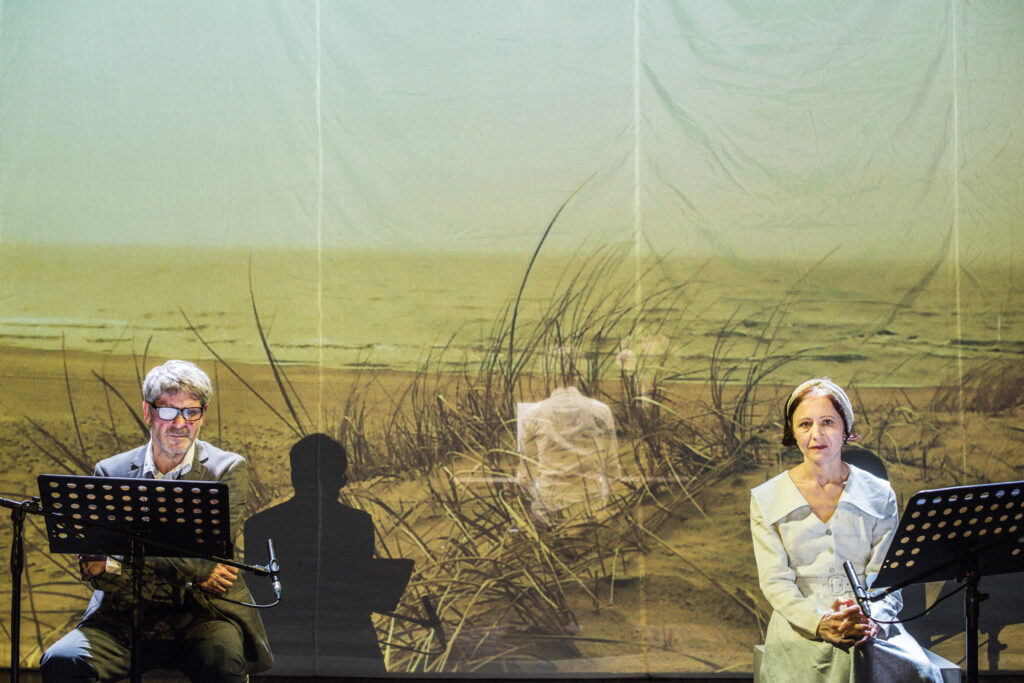
    I think this production will be something between music and theatre: the thoughts and feelings of the heroes are conveyed by the sounds of the piano, the words and the images of the changing sea on the screen. The sea symbolises a beloved verse of M. Duras, the writer loved to watch the sea, hearing it in her films, her texts, diaries, reflections… There seems to be no action but the intensity is recognized through the poetry of M. Duras. Personally, “AGATHA” is like swimming in the sounds, memories, feelings just like at sea.”

  • SOLO Theatre performance “UNE” – “Grand Prix” at the International Theatre Festival in Druskininkai (Lithuania)

    SOLO Theatre performance “UNE” – “Grand Prix” at the International Theatre Festival in Druskininkai (Lithuania)

    In the Lithuanian resort of Druskininkai, the 6th International Theatre Festival “Druskininkai Summer Theatre Crossroad” took place on 5-15 August, 2020. Even though the difficult conditions of the pandemic are still felt, the festival organizers managed to invite guests from Germany and Latvia alongside Lithuanian artists: the theatre “Silver Age” from Riga, the well-known Latvian actor Andris Bulis with the solo performance “Facebook. Life”, the theatre “Boris und Konsorten” (Stuttgart) which presented a performance based on M. Ravenhill’s play “The Product”. The performances of the festival were evaluated by members of an international jury in which Polish theatre critic Andriej Moskvin and Estonian theatre theorist and journalist Eteri Kekelizde joined the team.

    Good news: the “Grand Prix” award was won by Solo Theatre with the performance “UNE” (playwright, director and performer Birute Mar).

    “The legendary Lithuanian actress Une Babickaite-Baye, according to her diaries, is a personality whose strong creative energy still shines even today. Her life testifies to the meaning of creativity, her diaries radiate the joy of creativity and human wisdom, making you think about the relationship between an artist and a society how it was a century ago and how it is now. It also reminds us to smile when you realise that little has changed…”

    The team of Solo Theatre is delighted for having won the Grand Prix at the Druskininkai Festival. Une is on the stage again, this time with a new creative force!

    Also read about “UNE” at Druskininkai Festival here:

    https://www.obzor.lt/news/n62734.html

  • BIRUTE MAR WAS AWARDED THE LITHUANIAN GOVERNMENT’S PRIZE FOR CULTURE AND ART 2020

    BIRUTE MAR WAS AWARDED THE LITHUANIAN GOVERNMENT’S PRIZE FOR CULTURE AND ART 2020

    On 9 March 2020, the actress and director as well as the founder of Solo Theatre, Birute Mar, was awarded the Lithuanian Government’s Prize for Culture and Art for merits to Lithuanian culture and art. This award is presented annually to twelve well-known Lithuanian creators in the cultural field.

    Photos:

  • INTERNATIONAL PREMIERE OF THE PERFORMANCE “BUDDHA IN THE ATTIC” (05.03.2020)

    INTERNATIONAL PREMIERE OF THE PERFORMANCE “BUDDHA IN THE ATTIC” (05.03.2020)

    The team of Solo Theatre visited the FIAF-2020 (Fujairah International Arts Festival) where the international premiere of the play “BUDDHA IN THE ATTIC” based on the novel by Japanese-born American writer J. Otsuka took place on the 21st of February, 2020. One of the largest performing arts festivals in the UAE was organised on 20-28 February, 2020 in Fujairah where over thirty performances and concerts were shown and visited by several hundred guests including stage professionals, journalists from all over the world. The performance “The Buddha in the Attic” of the Lithuanian troupe became an event of the festival as it did not lack the attention of the international press and colleagues. The performance was filmed on Fujairah TV.

    Photos:


    Video from Fujairah TV:

  • BEST ACTRESS AWARD AT D.TAMULEVICIUTE’S THEATRE FESTIVAL IN VARENA (06.11.2019)

    BEST ACTRESS AWARD AT D.TAMULEVICIUTE’S THEATRE FESTIVAL IN VARENA (06.11.2019)

    Actress Birute Mar became the winner of the 10th D. Tamuleviciute’s Professional Theatre Festival. The festival jury awarded Birute Mar as the “Best Actress of the Festival” for her roles in the Solo Theatre’s performance “Buddha in the Attic” (author and director Birute Mar herself) based on Julie Otsuka’s novel of the same name. The honourable award was presented to the actress on 28 October, 2019 in Varena Culture Centre during the closing ceremony of the festival. More than 20 professional performances of Lithuanian theatres were shown at the festival which was celebrating 10th-anniversary.

  • “BUDDHA IN THE ATTIC” – “JAPANESE” PREMIERE OF THE SOLO THEATRE (27.09.2019)

    “BUDDHA IN THE ATTIC” – “JAPANESE” PREMIERE OF THE SOLO THEATRE (27.09.2019)

    SOLO Theatre welcomes the premiere “BUDDHA IN THE ATTIC” of the new season based on a novel by Japanese-born American writer Julie Otsuka. The performance was presented on 18 August, 2019 in Druskininkai at the international theatre festival “Druskininkai Summer Theatre Crossroads”. On 11 September, the premiere took place in Vilnius at St. Catherine’s Church organised by the Japanese Culture Festival “NowJapan”.  “The Buddha in the Attic” is a story about the fate of emigrants in the painful 20th-century. The play is a reminiscent of today’s emigration, the Holocaust period in Europe, the era of Lithuanian occupation and Siberian exile, when thousands of people were quietly “swept” off the map of Lithuania and the world itself.

    The project was funded by the Lithuanian Council for Culture


    Plačiau apie spektaklį – Aušros Gudavičiūtės interviu su spektaklio režisiere Birute Mar ir choreografe Sigute Mikalauskaite.