


A One-Act Play Based on the Novel by Julie Otsuka
Written and Directed – BIRUTĖ MAR
Choreographer and Assistant Director – SIGITA MIKALAUSKAITĖ
Set Designer – INDRĖ PAČĖSAITĖ
Music Composed and Selected – ANTANAS KUČINSKAS
Video Artist – KAROLIS BRATKAUSKAS
Lighting Designer – AUDRIUS JANKAUSKAS
Cast:
Performed by – BIRUTĖ MAR
Live Music – EGIDIJUS ALIŠAUSKAS
Duration – 1 hour
Translated from English by – Emilija Ferdmanaitė
Japanese-Language Text Transcription – Rio Kojima, Miyuki Takashina, Fumiyo Ariizumi
Premiere – 18 August 2019 (Druskininkai, International Theatre Festival “Druskininkai Summer Theatre Crossroads”)
11 September 2019 (Vilnius, NowJapan Japanese Culture Festival, St Catherine’s Church)
Upcoming Events
About
The novel “The Buddha in the Attic” (2011) by Japanese-American author Julie Otsuka, which quickly received prestigious literary awards in the United States and was also published in Lithuanian a few years ago (translated by Emilija Ferdmanaitė), is based on the true stories of Japanese immigrants in the early twentieth century. After the First World War, Japanese men sailed to San Francisco in search of work. Some eventually earned enough money to return to Japan, while others remained in America and began building families. They would send photographs of themselves to Japan (not necessarily genuine ones) and wait for brides who had chosen their future husbands based on these photographs.
The author follows in the footsteps of the “picture brides”, accompanying them on their gruelling voyage by ship to America, witnessing their first encounters with their future husbands and the shattering of their dreams of a wonderful life in America. Their daily routines continue until the fateful morning of the attack on Pearl Harbor, after which Japanese Americans were forcibly removed from their homes en masse and sent to internment camps. As the author describes it, they vanished from American cities and towns like mist, as though they had never existed.
“The Buddha in the Attic” is a story about the lives and fates of immigrants. In its own way, it echoes both contemporary migration and the painful period of mid-twentieth-century European history, when thousands of people of different nationalities were silently “wiped off” the maps of Lithuania and the world.
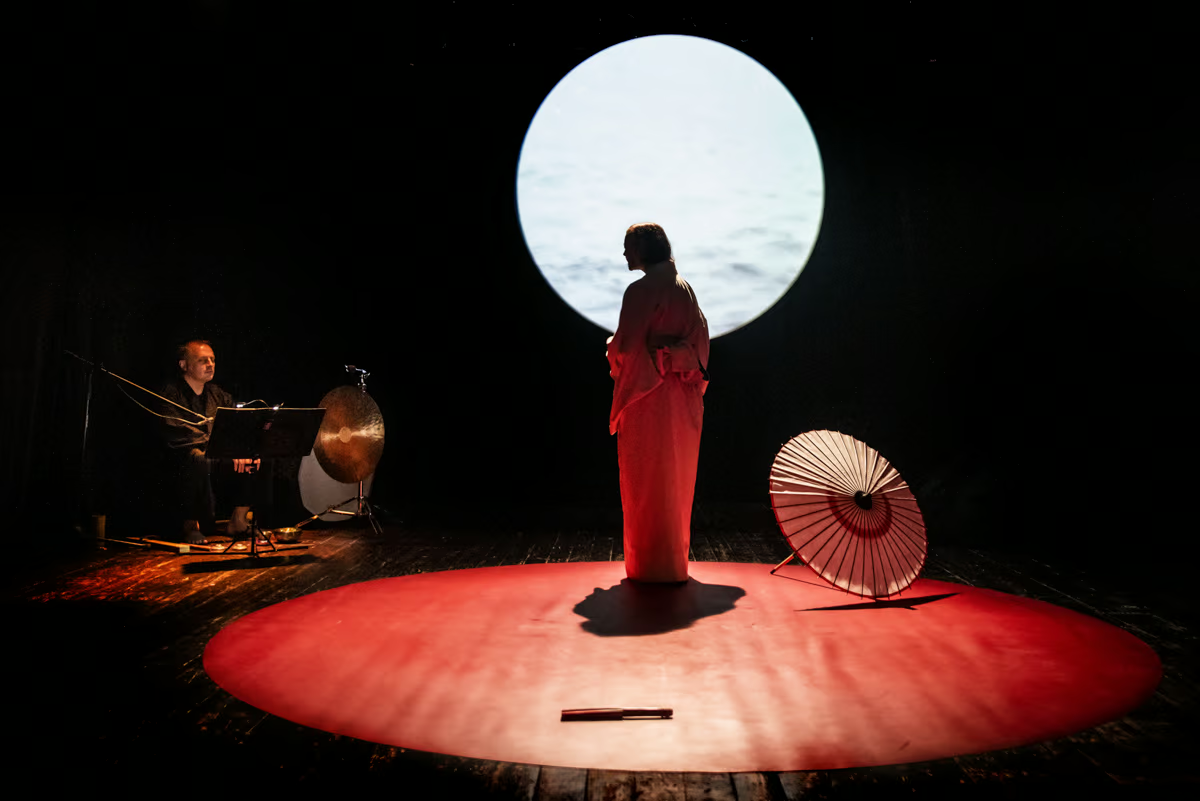
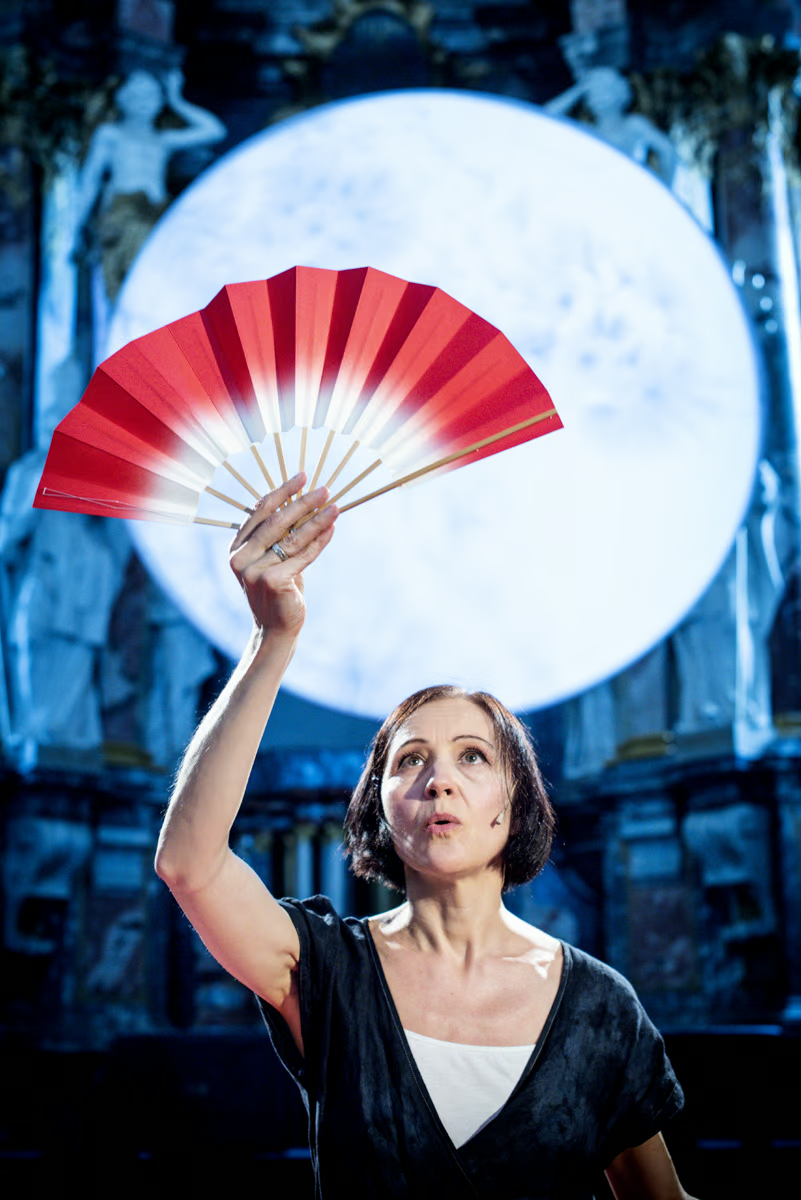
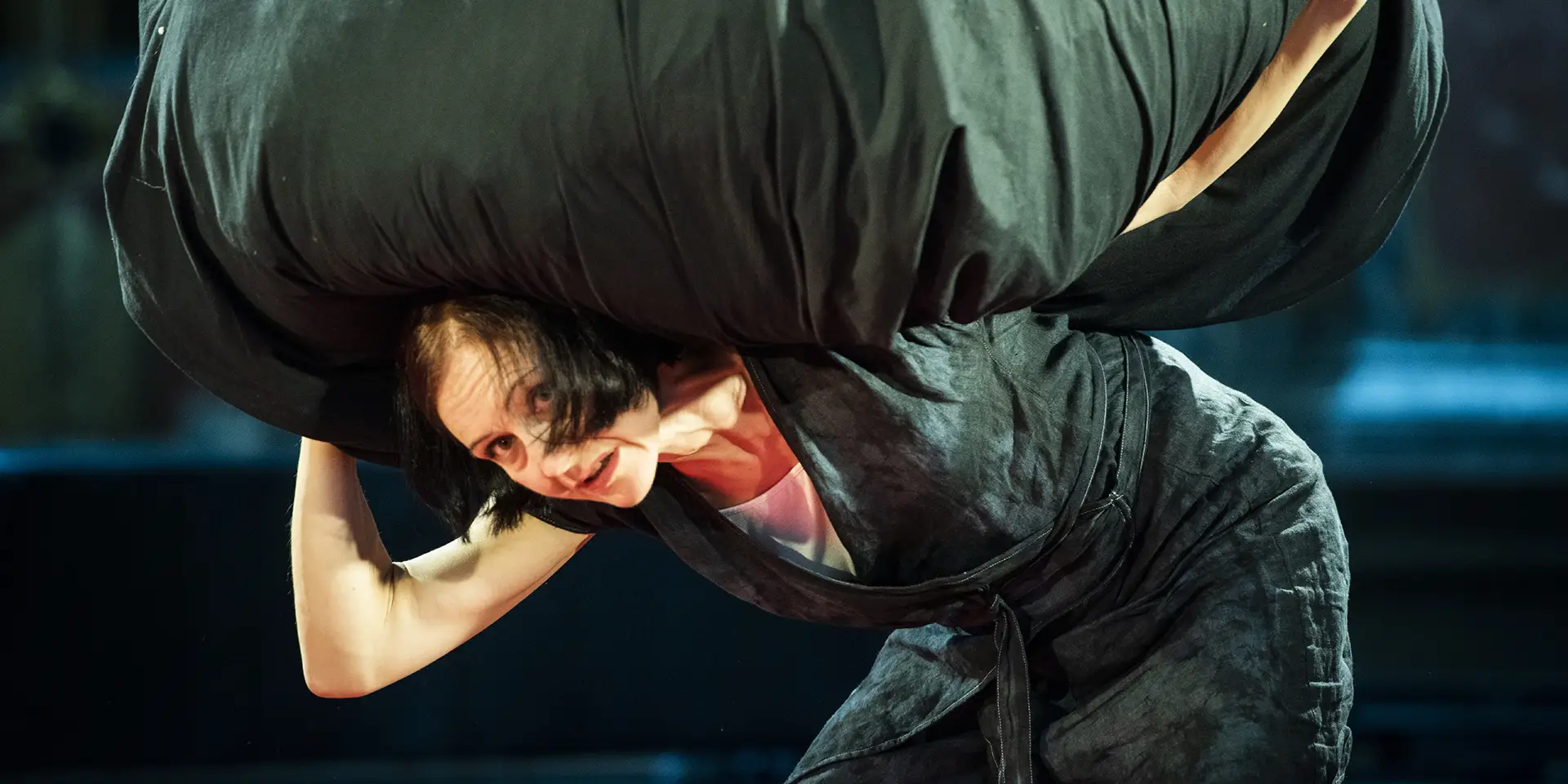
The performance draws on the principles of traditional Japanese theatre, combining dance, movement, spoken text and live music performed on stage. This creates a distinctive theatrical language of symbols and gestures (the production’s director and performer, Birutė Mar, studied traditional Japanese theatre and dance in Tokyo). Through this unique form of expression, the performance explores the importance of one’s roots, the connection to the past and to one’s ancestors in an era of increasing cultural diversity and interaction between nations. It portrays national identity as a source of strength and a means of survival.
Documentary Film About the Performance “The Buddha in the Attic”
(2020, with English subtitles)

“The Buddha in the Attic”, a slender novel with a distinctly Japanese sensibility, captivated me with its spare, poetic narrative that flows almost like music. Julie Otsuka tells the story of her parents’ and ancestors’ emigration in the first-person plural, using “we”. It is as though a chorus of thousands of women echoes her voice, reminiscent of an ancient Greek tragedy or Japanese Noh drama. These are women who share the painful fate of those torn from their roots.
“It is an opportunity to speak on stage with the voices and hearts of countless women, to tell not only the stories of Japanese women, but also those of Lithuanian, Jewish and other peoples who have endured humiliation, violence, injustice and undeserved suffering…”
/Birutė Mar/
“…Some of us walked weeping. Others walked singing. One of us walked with her hand over her mouth, laughing hysterically. A few of us walked drunk. /…/”
“Most of us spoke English among ourselves as we walked, so as not to provoke the crowd that had gathered to stare at us. Many of us had lost everything and walked in silence. All of us wore white identification numbers pinned to our collars and lapels. /…/”
“Tsugino walked with a clear conscience, having shouted a terrible, long-kept secret down a well. “I stuffed my baby’s mouth with ashes, and he died.” Kiyono from White Road Farm walked convinced that this was punishment for sins committed in a previous life. “I must have stepped on a spider.” Setsuko from Gridley had slaughtered all her chickens before leaving. /…/”
“Iyo walked carrying a suitcase with an alarm clock ringing at the bottom, but she did not stop to turn it off. Kimiko had left her handbag on the kitchen table, but by the time she remembered, it was too late. Before leaving, Haruko had hidden a tiny laughing bronze Buddha in a corner of the attic, where he continues to laugh to this day.”
/Julie Otsuka/